Switching Art Processes Keeps My Hand Light, My Brain Engaged & Just A Teeny Bit Uncomfortable.
If I've been working on a new collection of work for a little while, I purposely switch mediums midway. Here is why doing so works for me.
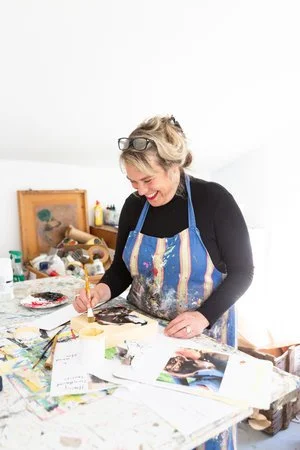
I’m an artist who loves to jump from one medium to another. Doing so keeps my hand light and me from getting too caught up in perfection. Freedom to make is balm for any artist. My only caveat these days is to give myself time to actually set my studio up for each discipline before launching in.
Old head on not-so-young shoulders tells me that doing this offers way more clarity when jumping from medium to medium, and a much-needed calmness when switching tactics.
Gone are the days when I could work in true chaos. Mixing paints while also having a table of printing inks out is too much for my brain to catch up with. Away go the paints, then out come the printing inks now. Done fairly swiftly (say, a good hour or so), the momentum for the collection isn’t affected as I once feared it would be.
Switching between painting and printmaking is a wonderful way to work fast - and then work slow. Both are manual, but the process of printmaking is way more hands-on in terms of stages, which can not be rushed.
Painting for me is as much about taking out and overpainting as it is painting in. Let’s say I begin a painting with four animals in it, I’ll likely end up with just one animal on the canvas by the end.
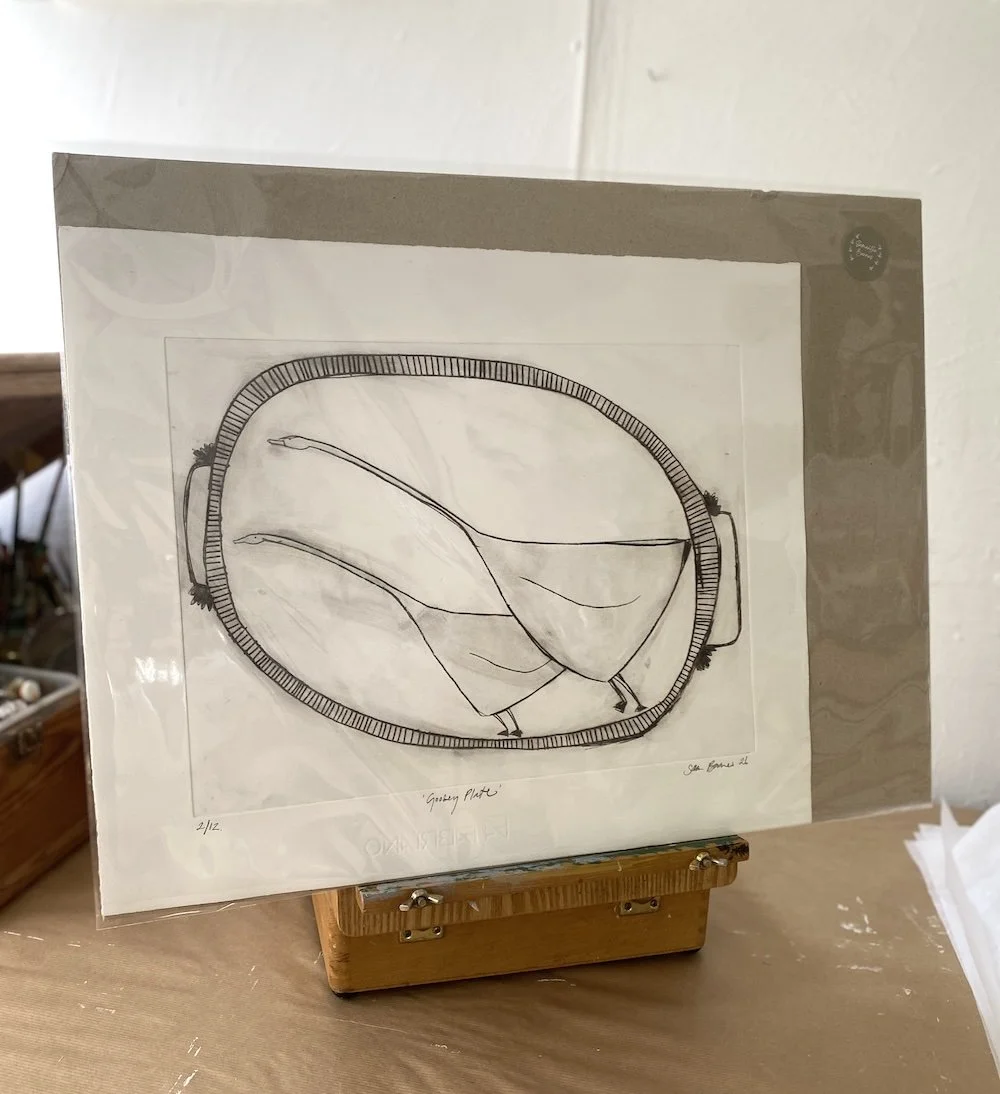
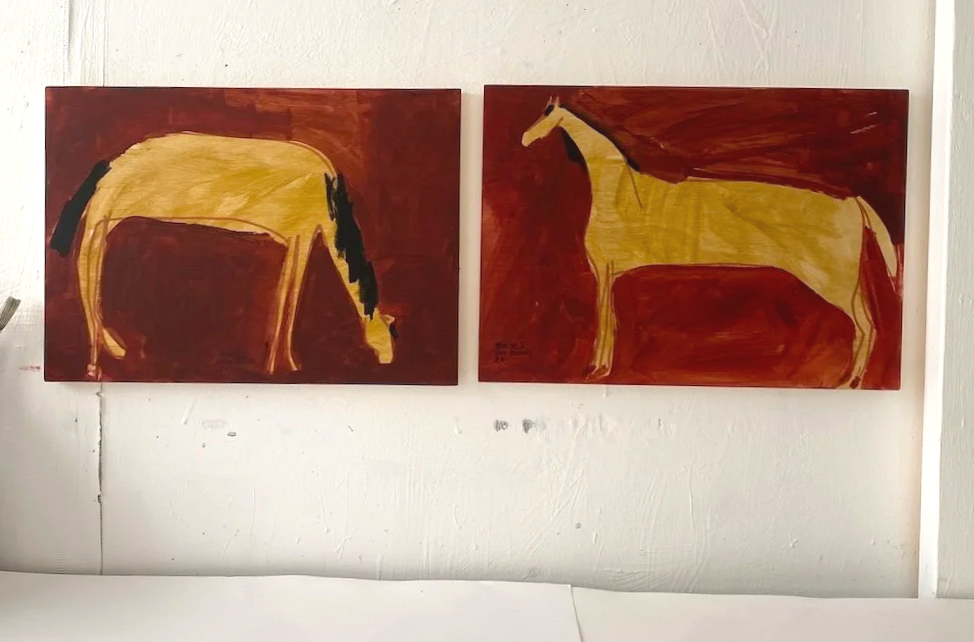
From top: Horse 1 & Horse 2 Original Paintings on Birch Panel. ‘Goosey Plate’ Drypoint Print. Both available this coming autumn. To be the first to hear about them, please join my mailing list here
Printmaking is much more manual and intentional from the get-go. My plate is my plate - there is no dicking around with the lines once they have been made. The only control I have is the colour and amount of ink, and where I control it’s density on the plate.
From having my image set in stone (well, actually in perspex or aluminium) the process as it has been since its invention in the late 15th Century.
Dampening the paper, pressing the ink into the groove (burr) on the plate, then removing the excess, placing face up on the press, blotted paper placed over the top then the roller over twice.
My son made this film of me making some drypoints recently. There is no sound to it and it’s short-short. (My favourite bit is his socks and sandals)
If you are new to painting or printmaking, I can only tell you how happy I am that you have found your way to doing so.
Printmaking is a manual process is the epitome of mindfulness. The process is the magical bit, the reveal of the final print is the cherry on the cake.
Much love
Sam x